What asphalt paving costs in San Antonio right now
Most asphalt work in San Antonio lands somewhere between three and seven dollars per square foot. A small residential driveway usually comes in at a few thousand dollars. A commercial lot runs into the tens of thousands. That spread is wide because paving is not a product off a shelf. The exact number depends on the site, the square footage, the condition of the base under it, and how easily a truck can get to the work. You get that number after a free quote, not before anyone looks at the ground.
Here is the honest version of the pricing question. Two driveways the same size, one in Stone Oak and one off Loop 410, can quote thousands apart because of what is under them. Soil, slope, and access do most of the work on the price. Square footage just sets the starting point.
Why the base drives the price here
San Antonio sits on expansive clay and caliche. The clay swells when it rains and shrinks back when the heat comes, and it moves the ground under your pavement with it. Asphalt laid on a thin or unprepared base follows that movement. You see it as alligator cracking in the wheel paths, then a low spot that holds water, then a pothole two summers later.
That is why a quote with more base work in it is often the cheaper quote over ten years. Cutting out soft soil, hauling in and compacting a proper flexible base, and setting the grade so water runs off costs real money up front. Skipping it costs more later. When our crew prices asphalt paving on a property, the base and the drainage plan are the two line items we spend the most time on.
What actually moves your number
Square footage
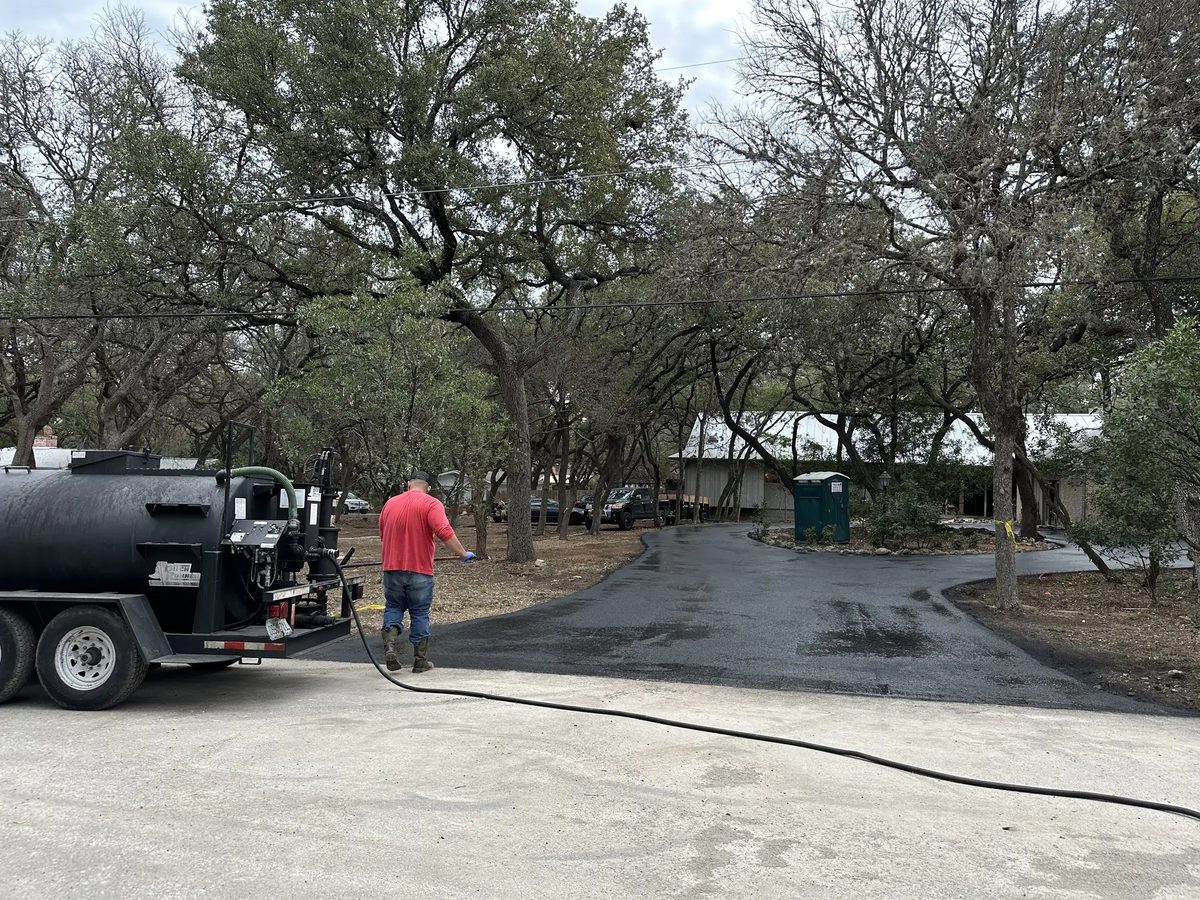
Bigger jobs cost less per square foot. Mobilizing a paver, a roller, and a crew costs about the same for a six hundred square foot driveway as it does for a ten thousand square foot lot. On small residential work you are paying for that setup across fewer feet, so the per foot figure sits at the high end of the range. Large commercial lots sit at the low end.
Asphalt thickness
A residential driveway that sees cars and a pickup usually gets two inches of surface over a compacted base. A lot that takes delivery trucks, trash trucks, or a loaded trailer needs three inches or more, and a thicker base under that. Thickness is the easiest place for a low quote to hide, so ask what depth the number is based on.
What is there now
Bare dirt, an old gravel drive, cracked asphalt, and a broken concrete slab are four different jobs. Tearing out and hauling off old pavement adds cost before a single ton of hot mix shows up. Sometimes we can overlay what is there, which is far cheaper. Sometimes the old surface has failed all the way through and an overlay would just crack in the same places within a year.
Access and grade
A flat, open lot off a main road is the cheapest thing to pave. A steep driveway behind a gate in Timberwood Park with low branches and a tight turnaround is not. If the paver cannot get in, the work slows down, and slow work costs more. Grading a site that drains the wrong way adds cost too, and it is worth every dollar in a city that gets its rain in short, heavy bursts.
Know what your driveway or lot will actually cost
Call (830) 266-0629 for a free on site quote anywhere in San Antonio or South Texas.
Typical San Antonio ranges by job
These are market ranges, not a price list. A residential driveway of six hundred to a thousand square feet generally lands in the low to mid thousands of dollars for a full tear out and repave. A small commercial lot usually runs into the tens of thousands once you include base repair and striping. Patching a few failed areas can be a few hundred to a couple thousand dollars. Every one of those numbers moves once someone stands on the property and looks at the soil, the drainage, and the access.
Oil prices also matter. Asphalt binder is a petroleum product, so hot mix pricing moves with the market and with the season. Paving in the middle of a Texas summer when plants are busy is not the same quote as paving in a slower stretch of the year.
Asphalt or concrete
Asphalt costs less up front and goes down faster. You can drive on it in a day or two. Concrete costs more per square foot, cures longer, and holds up better under heavy standing loads like a dumpster pad or a truck apron. Plenty of properties in San Antonio use both, asphalt for the drive lanes and concrete work for the pads and approaches. If your budget is the deciding factor, asphalt almost always wins the first cost comparison.
The cost after the paving
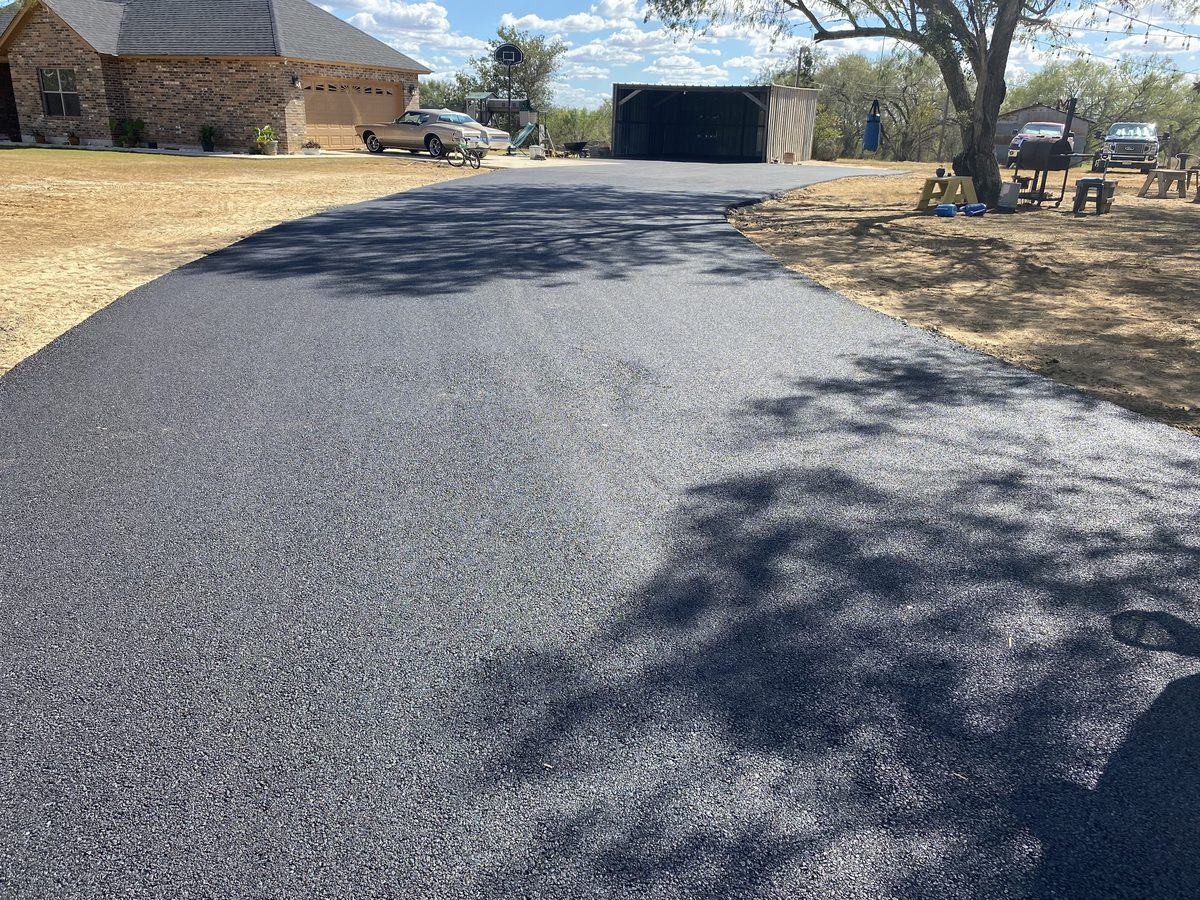
New asphalt is black because of the oils in the binder. The Texas sun bakes those oils out and the surface goes gray and brittle, usually within the first couple of years. That is when hairline cracks start letting water into the base, and water in the base is what turns a small crack into a repave. Budgeting a modest amount every few years for seal coating and crack filling is far cheaper than the alternative.
For commercial lots, add striping. Fresh layout, ADA stalls, and signage are a separate line from the paving itself, and they are usually a small fraction of the total.
How to compare two paving quotes
Get the numbers on the same footing before you compare them. Ask each contractor for the compacted thickness of the surface and the base, the square footage they measured, what happens to the old material, and how the site will drain when it is done. A cheap bid usually gets cheap somewhere specific, and it is almost always in the base or the thickness. If one number is far below the others, that is the question to ask.
Free quotes, no guessing
Give us the address and we will measure the site and put a real number on paper.
Getting a real number for your property
We give free quotes across San Antonio and South Texas, from Bulverde and Schertz down through Converse and Selma. Someone comes out, measures, looks at what is under the surface and where the water goes, and puts a real number on paper. Call (830) 266-0629 and we will get you on the schedule.