There isn't a calendar answer, and be wary of anyone who gives you one
Seal coat gets replaced when it has worn out, and how fast that happens depends on your pavement, your sun and your traffic. A number pulled off a website does not know any of that. Plenty of firms publish an interval anyway. The reason to be careful is not dishonesty, it's that an interval is easy to publish and a look at your lot isn't.
For scale on how wide the range really is: TxDOT's seal coat manual, which covers the aggregate seal coats used on state highways rather than the sealer that goes on a driveway, puts the average life at about six to eight years and notes that some have lasted up to twenty (TxDOT, Seal Coat and Surface Treatment Manual). Different product, different traffic. But a spread that wide on engineered highway work should tell you how much faith to put in one number for your driveway.
What seal coat is doing up there
Asphalt is stone held together with binder. The binder is the part that ages, and the two things that age it are ultraviolet light and water. Sun dries it out until it turns brittle and starts releasing the stones it was holding. Water works into the gaps that opens and makes them bigger, especially when traffic pumps it in and out of a crack.
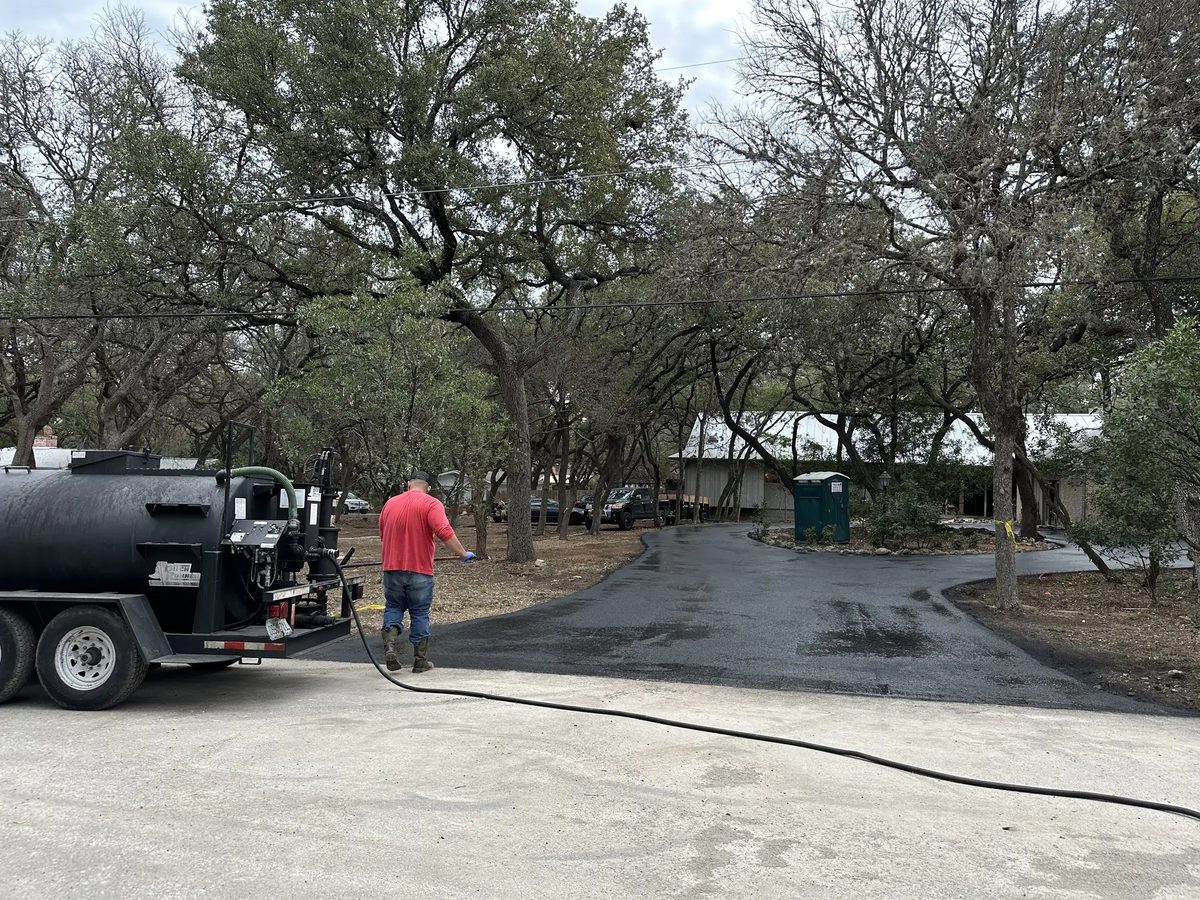
Seal coat is a thin layer whose purpose is to take that punishment instead of the pavement. So it wearing out is the thing working, not failing. The only question is whether you replace it before or after the pavement underneath starts paying for it.
The three things to actually look at
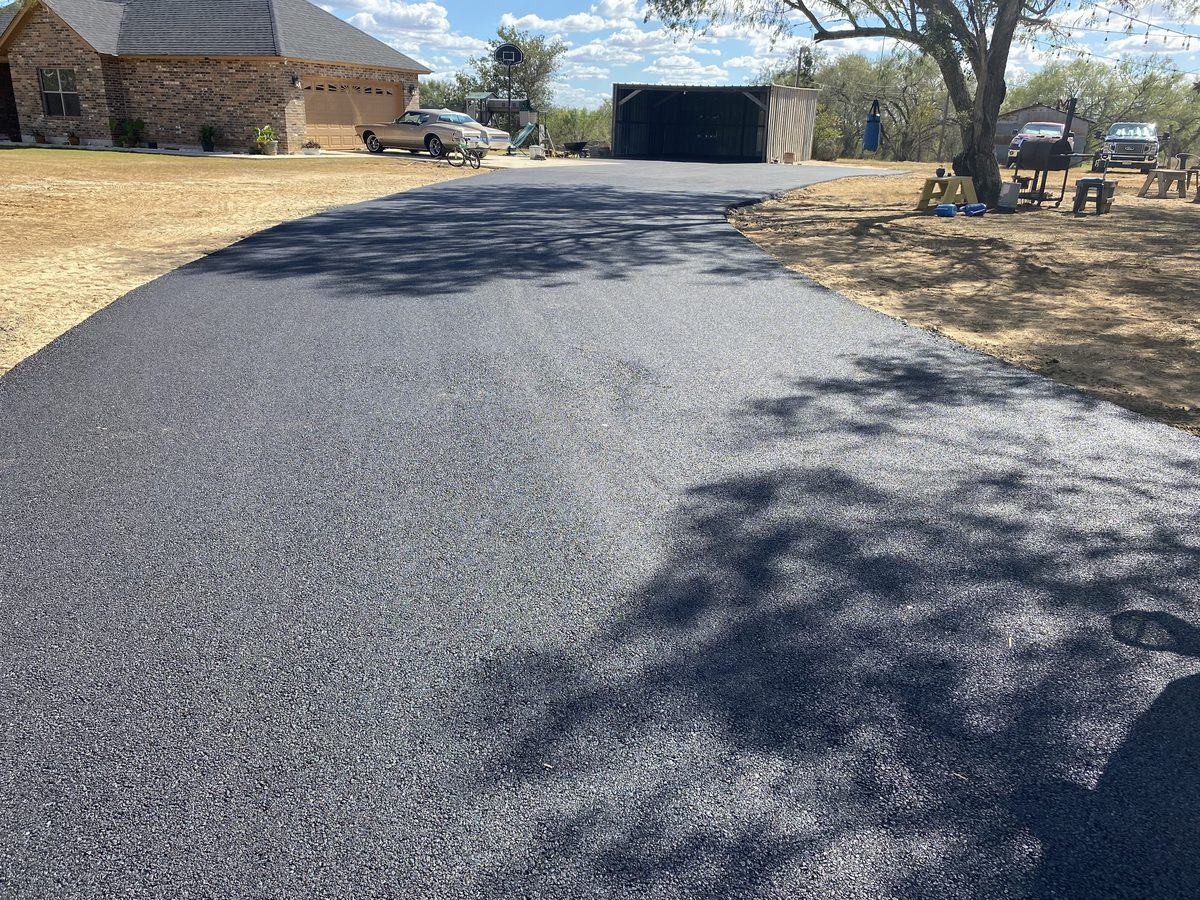
Colour first. Well protected asphalt reads black or close to it. As the seal goes it fades towards grey, and the fade is usually uneven: the drive lane and the parking bays age at different speeds because they take different amounts of sun and rubber.
Texture second. Get close. When it's sealed the surface reads closed and fairly uniform. When the seal has gone you can pick out individual stones with your eye, and a hand over it feels like coarse sandpaper. That's the binder having retreated far enough to leave the aggregate standing proud, and it's the clearest signal there is.
Water third, and this is the test anybody can run in a minute. Tip a bottle of water onto the pavement. On a sealed surface it sits up, beads and runs off. On bare pavement it goes dark and soaks straight in. If it soaks in, there is nothing between your binder and the next rain.
Want a straight answer about your own pavement?
Call or text (830) 266-0629 for a free quote with no obligation. We'll tell you if it doesn't need doing yet.
Why South Texas wears a seal faster
Two local conditions do most of the work, and neither needs a number attached to be true. The first is sun. Long, intense summers with the surface temperature far above the air temperature drive the binder out of the top layer, and a west-facing driveway with no shade takes considerably more of that than a lot that spends half the day under a building's shadow.
The second is how rain arrives here. It comes hard and all at once rather than steadily, so a lot with less than good drainage gets sheets of water moving across it. Water crossing a surface takes the weakened top layer with it. Water standing on one works its way down. Both are harder on a tired seal than the same rainfall spread out gently.
Traffic matters more than square footage
A residential driveway with two cars on it and a commercial lot taking deliveries all week are not on the same schedule, even if they were sealed on the same day. Wear concentrates where tires turn, brake and sit still. Look at the entrance, the turning circle, the bay nearest the bins and wherever a heavy vehicle parks in the same spot daily. Those go grey while the rest of the lot still looks fine, and they are what you should be inspecting.
Which is why a whole-lot answer is often the wrong answer. Sometimes the honest recommendation is to leave most of a lot alone another year and deal with the worn areas.
What sealing will not fix, and this is the part worth knowing
Sealer is a coating. It does not repair anything. Three situations where it is the wrong spend, and where being told otherwise should make you ask more questions: cracks in a connected web that flex when a tire crosses them, because that pattern is about the base rather than the surface; potholes that have gone through to the layer below; and water standing on the lot a day after rain, which is grade and drainage and a coating cannot change where water goes.
That distinction between a surface problem and a base problem decides whether you're looking at a coating, a patch, an overlay over still-solid base, or a tear-out. It's also where most of the money is, so get a straight read on it before anyone quotes you a treatment. We'd rather tell you a lot needs more than sealing, or less, than sell you a coating over a base that's gone.
A sensible routine
Walk it once a year, ideally at the end of summer when the sun has done its worst, and use the three checks above. Deal with cracks as they appear instead of saving them up, because an open crack is a route for water into the base and that is the expensive failure. When the surface is fading and opening up but the pavement underneath is sound, that is when sealing is worth the money, and getting seal coating and striping done in one visit means the lot closes once.
Lonestar Construction Industries works across San Antonio and South Texas, from Stone Oak and Timberwood Park out to Bulverde and Schertz. If you want somebody to look at a driveway or a lot and say plainly whether it needs sealing yet, the contact page has the quote form.
Free quote, and an honest answer either way
Call or text (830) 266-0629. We'll tell you whether it's a coating, a patch or a bigger job before you spend anything.