The short answer
Most people call us with the same question. Concrete or asphalt? Here is how we answer it on the phone. If you want the lowest price today, asphalt wins. If you want the driveway to sit there for decades with almost no attention, concrete wins. Both work in San Antonio. Neither one works if the base under it is bad.
That last line is the part most folks skip. Our ground moves. San Antonio sits on expansive clay and caliche. The clay swells when the rain comes and shrinks when it dries out. That movement is what cracks driveways here. The surface you pick is the second decision. The base is the first one.
What a driveway costs in San Antonio
Prices move with fuel and material costs, so treat these as ranges and nothing more. In our market, an asphalt driveway usually lands somewhere around three to seven dollars per square foot installed. Concrete usually runs about six to twelve dollars per square foot. On a normal two car drive, that is a few thousand dollars either way, with concrete on the higher end.
Your real number depends on four things. How big the drive is. What shape the base is in. How much slope and drainage work it needs. And whether a truck can get to it. A tight lot behind an older house near downtown costs more to work than an open acre out in Bulverde. We give free quotes, and the number comes after we look at the site.
One more cost note. Asphalt is cheaper to put down and cheaper to patch. Concrete costs more up front and costs more to repair. When a concrete panel cracks all the way through, the fix is usually to break it out and pour it again. When asphalt cracks, we fill it and move on.
Want a real number for your driveway?
Call (830) 266-0629 for a free quote and we will price both surfaces for your site.
How long each one lasts here
Asphalt on a home driveway gives you a good run if you look after it. Seal it, keep water off the edges, and it holds up. Skip that and the Texas sun does its work faster. Concrete usually outlives asphalt by a wide margin on a residential drive. That is the honest trade for the higher price.
Lifespan claims get thrown around a lot. We will not give you a number of years, because the number depends on the base, the drainage and the traffic. A drive with two cars on it and water running off the side lasts far longer than the same drive with a work truck parked on the edge and a downspout dumping on it.
Heat is the real test in South Texas
Up north, people worry about freeze and thaw. Here the problem is heat. Asphalt is a flexible surface held together with binder. Our sun bakes that binder, dries it out and grays the surface. A black drive in Stone Oak in August gets hot enough to soften at the top. Park a trailer jack or a motorcycle kickstand on it at two in the afternoon and you can leave a dent.
Concrete does not soften. It stays lighter in color and cooler under bare feet, which matters if kids run across it to the pool. Concrete has its own heat problem though. It expands, and if the slab has no control joints in the right places, it picks its own crack line.
Then there are the storms. We go dry for weeks, then a summer downpour drops more water in an hour than the ground can soak up. Water is what kills a driveway here, not the sun on its own. Runoff that sits at the edge of asphalt gets under it and softens the base. The same water washes out the dirt beside a concrete slab until the edge has nothing under it.
Upkeep, and what it actually asks of you
Asphalt needs seal coating every few years to stay black and keep water out. That is the deal you make when you go asphalt. It is not hard and it is not expensive next to the cost of the drive, but it does not do itself.
Concrete asks for less. Keep the joints sealed, clean up oil before it soaks in, and that is close to all of it. Concrete does show stains more. Oil spots and rust marks sit on a light surface where nobody misses them. Asphalt hides all of that.
The base under it matters more than the surface
This is the part we push hardest on, and it is where cheap jobs go wrong. On our clay, a driveway laid straight on graded dirt will crack. It might look fine for a season. Then the ground moves and the cracks show up in the same spots every time.
A good job means the soil gets prepped, a proper base course goes down and gets compacted, and the water has somewhere to go. For concrete work, thickness and steel matter too. Ask any contractor how thick the slab will be, what goes under it and where the water runs. If the answer is vague, keep calling.
What we would pick
If it were our own house, most of the time we would pour concrete on the driveway and use asphalt on the long stuff. A short drive out to a city street is a small area, so the price gap is smaller than people expect, and concrete gives you a surface you can forget about.
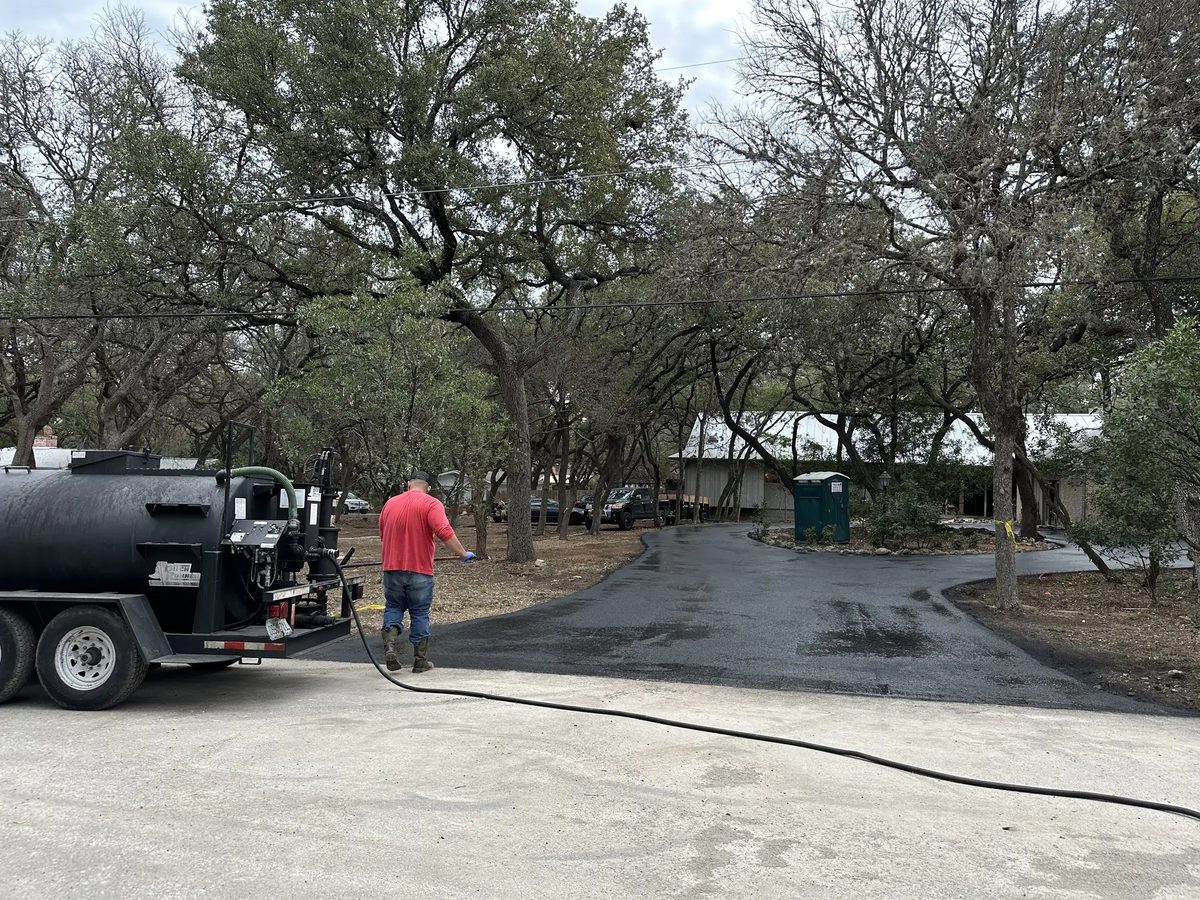
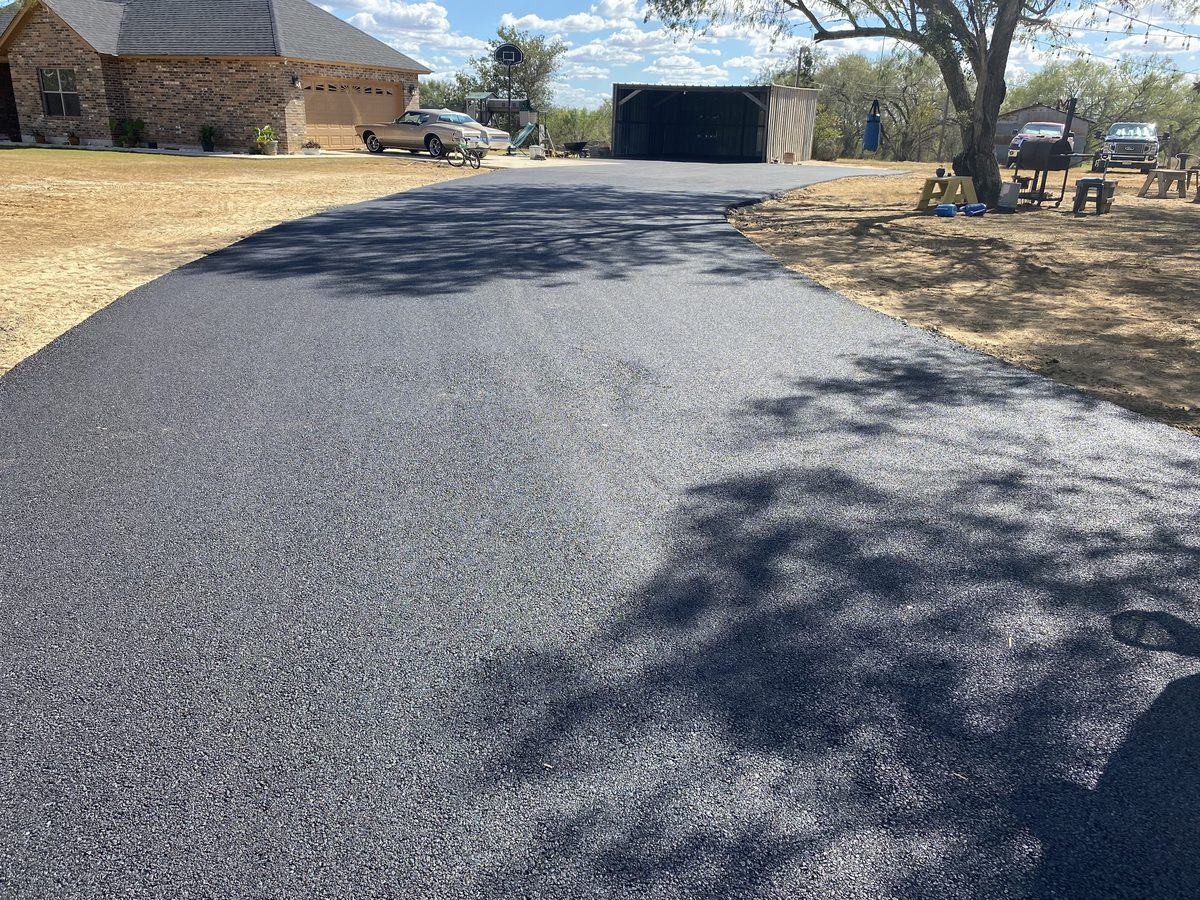
Asphalt earns its keep on the big ones. A long ranch drive out toward Leon Springs or a lot on acreage runs into real money in concrete. Asphalt covers that ground for less, goes down in a day or two, and you can drive on it fast. It is also the right call for parking lots, which is why it is the bulk of what we pave.
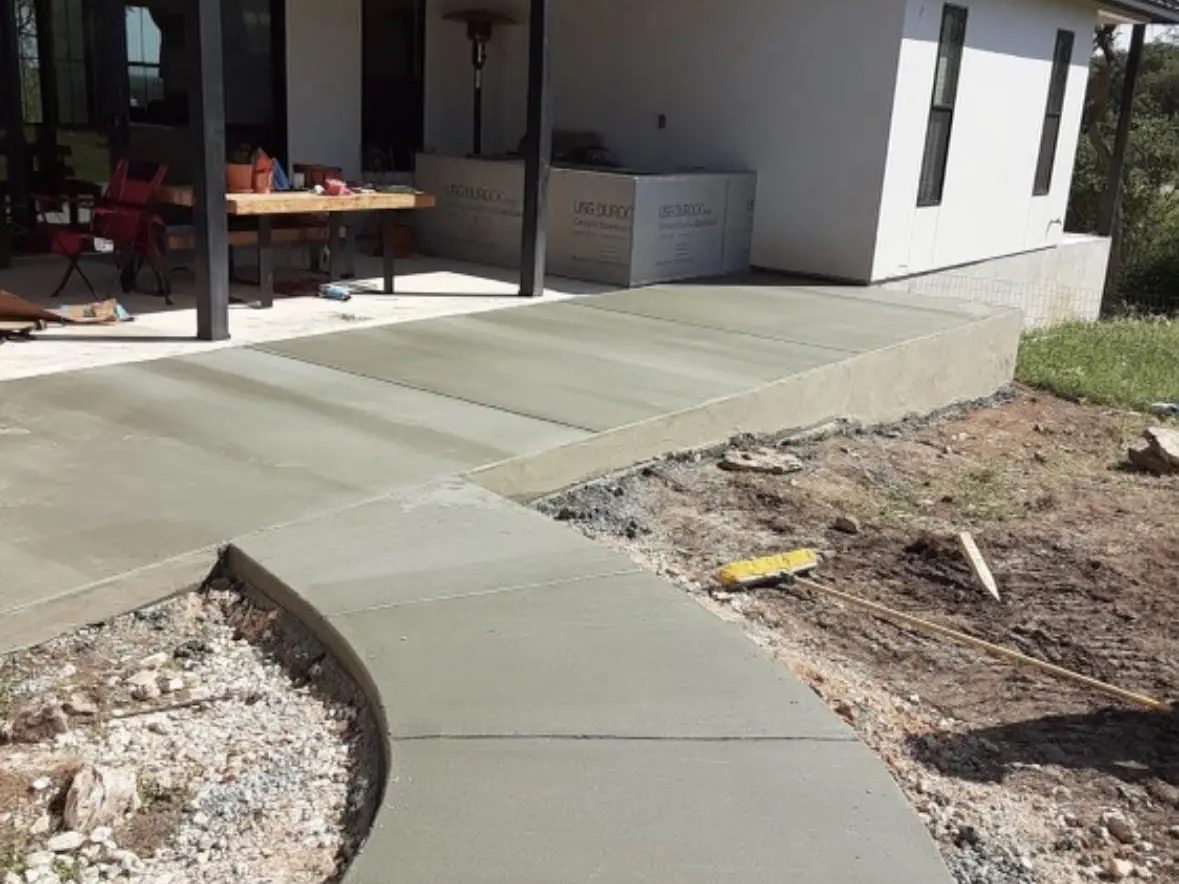
There is a middle road too. Some owners pour a concrete apron at the garage, where oil drips and tires turn, then run asphalt the rest of the way. That puts the harder surface where the wear is.
Free quote, both options priced
Tell us the size of your drive and we will walk the site and give you honest numbers.
How to decide in five minutes
Pick concrete if you plan to stay in the house, you want the lowest upkeep, and the drive is short. Pick asphalt if the area is large, the budget is tight, or you need it usable quickly. Then call someone out to look at the ground before you sign anything.
We pave and pour across the San Antonio metro, from Schertz and Cibolo out to Timberwood Park. Quotes are free. Call (830) 266-0629 or send us a note through our contact page and we will come look at what you have.