What sealcoating costs in San Antonio right now
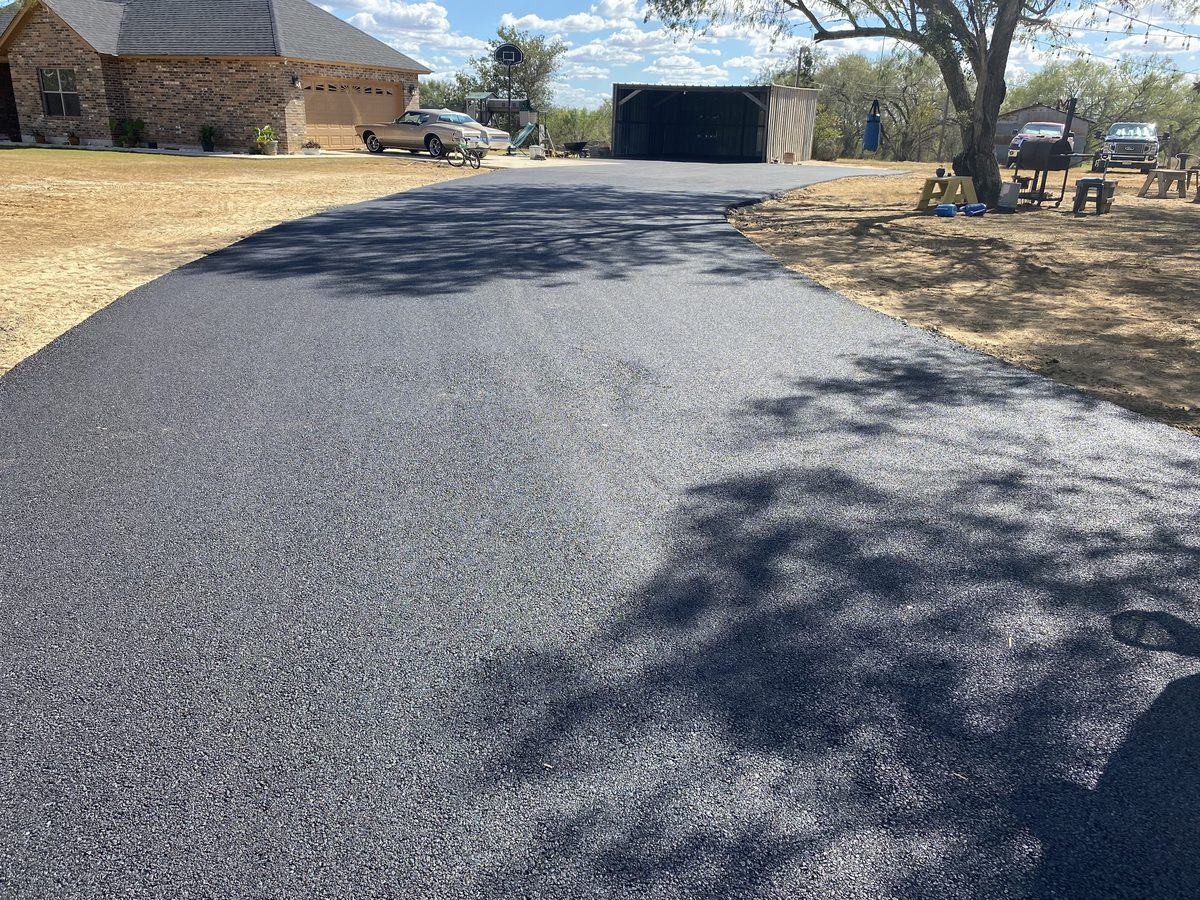
Most sealcoating work around San Antonio lands somewhere between fifteen and twenty five cents per square foot for a single coat on a lot in decent shape. Two coats, heavy crack work, or a lot nobody has touched in years pushes the number higher. On a ten thousand square foot strip center lot, that usually works out to a couple thousand dollars for a straight sealcoat, and more once repairs are in the scope. Your exact number depends on the site, the square footage, the condition of the base, and how easily we can get equipment in and out, and it comes after a free quote.
That range is the honest middle of this market. Sealer prices move with oil, so quotes drift year to year. When a bid comes in far under the range, the mix is usually thinned with water or the crack filling got left out. A lot in Stone Oak that has not been sealed in six years is not the same job as a lot in Schertz that gets a coat on schedule. Same square footage. Different price.
Why square footage moves the number
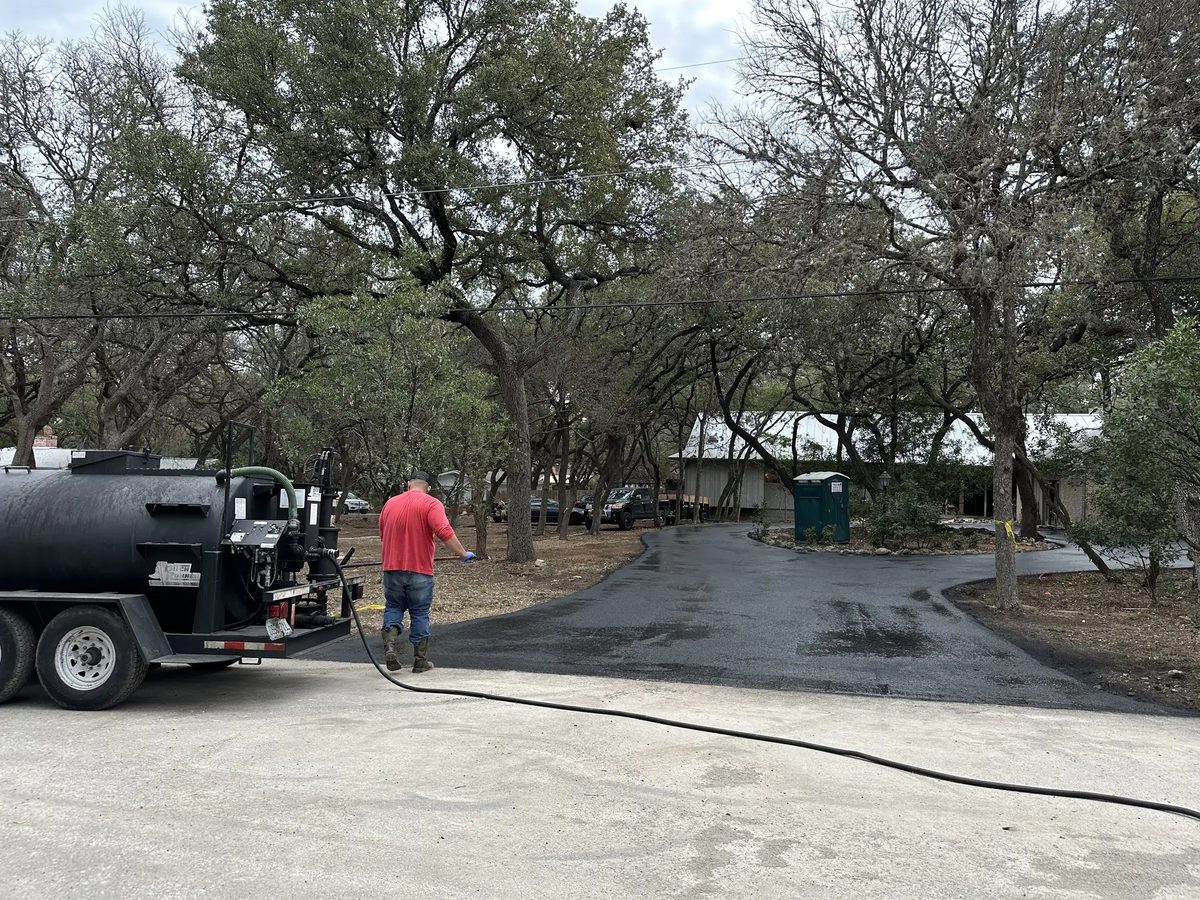
Sealcoating gets cheaper per square foot as the lot gets bigger. Mobilization costs the same on five thousand square feet as it does on fifty thousand. Hauling the tank, taping the building edge and the curbs, setting cones, blocking off half the lot so traffic keeps moving. That happens once. Spread those hours across more area and the per foot price drops.
A small office lot tucked behind a building off Bandera Road can price near the top of the range. A big retail lot out by 1604 lands near the bottom. Owners compare notes and get confused by that gap. It is setup time divided by area, nothing more.
There is also a floor. Below a certain size a sealcoat job costs roughly what it costs to show up, so a small lot or a long driveway reads as expensive per square foot no matter who quotes it.
Condition swings the price more than size does
Sealer is a coating. It does not repair anything, it does not bridge a crack, and it will not hold together a lot that has already started coming apart. The prep work in front of the sealer is where the price really moves.
Crack filling is the usual line item. Hot pour rubber runs its own range per linear foot, and a lot with two hundred feet of cracking is a different bill from one with two thousand. San Antonio hands us plenty of both. Our clay and caliche soils swell through a wet spring and shrink back in an August drought, and pavement built on a thin base splits along that movement every year.
Then there are the potholes and the alligatored patches by the dumpster pad and in the drive lane. Those get cut out and patched before any sealer goes near them, and that is asphalt repair priced on its own. Oil spots need a primer or they bleed through the coat within weeks. Weeds growing out of the seams have to be killed and scraped first.
On a neglected lot the repairs can cost more than the sealcoat itself. That is normal, and it is better to hear it in the quote than to find out when the coating peels in March.
What a real sealcoating price includes
A sealcoating price should come with the scope written out. Blow and sweep the whole surface. Wire brush and scrape the oil spots. Hot pour anything wider than a quarter inch. Cut and patch the failed areas. Then one or two coats of sealer, sprayed or squeegeed, with the edges cut in by hand along curbs and the building line.
Striping is a separate line, and you will need it. Sealer erases every marking on the lot, so the stalls, the arrows, the fire lane, and the accessible spaces all get laid back out once the coating cures. Booking the striping and signage in the same visit costs less than bringing a crew back for it later.
Get a real number for your lot
Call (830) 266-0629 for a free quote and we will walk the pavement before we put anything in writing.
One coat or two
One coat holds up fine on a lot that gets sealed every couple of years and only sees passenger cars. Two coats make sense on gray, porous pavement or on the loading side where box trucks turn tight. Two coats roughly doubles the material, so the price lands at the top of the range or past it.
Sand in the mix is the other choice. Sand loaded sealer wears longer and gives real grip underfoot. It costs more per gallon. On a sloped hillside lot up in Timberwood Park, we would rather sell you the sand than watch somebody slide on a wet morning.
How often a lot needs sealing in this climate
Two to three years is the honest interval for most lots here. Sun drives that. UV cooks the binder out of the surface, the black goes gray, and the aggregate starts letting go under your shoe. Up north, freeze and thaw is what kills pavement. In San Antonio it is heat cycling and the summer downpours that push water into every open crack.
A lot on a schedule stays cheap to maintain. A lot that goes seven years without a coat stops being a sealcoat job and becomes a repair job, and repairs cost several times what maintenance does.
When we tell you not to seal
We will tell you when sealer is a waste of money. If a quarter of the lot is alligatored, if fines are pumping up through the cracks after a rain, or if water ponds in the same low corner every storm, a coat only makes a failing lot look black for a season.
Then the conversation turns to an overlay, or a full depth rebuild, or fixing the drainage before anything else. Base and drainage matter more than any topcoat in this soil. We would rather quote the work that fixes it than sell you a coating that hides it.
Free quote, no obligation
Send us the address at (830) 266-0629 and we will measure the lot and price the actual scope.
Getting a quote on your lot
Send us the address and we will measure the lot, count the cracking, look at the low spots, and price the real scope. We work across the metro and South Texas, from downtown out to Bulverde and over to the Schertz and Cibolo side. The visit is free and nothing is owed after it. The full rundown of our seal coating work is on the service page.